 CHONGXIN
How to Specify Mesh
Mesh count, wire diameter and aperture together; wire gauge; the specification table.
Wire gauge · Specification table
Open on this page →Mesh count, wire diameter and aperture should be specified together. For Dutch weave or multilayer constructions, include the filtration rating and its basis. Request a quotation on the product page that matches the item.
Choose a topic
Mesh count, wire diameter and aperture together; wire gauge; the specification table.
Wire gauge · Specification table
Open on this page →Plain, twill and Dutch weaves; when a filtration rating is required.
Dutch weave and filtration rating
Open on this page →Stainless 201 / 304 / 316 / 430; copper alloys; iron wire.
Open on this page →Rolls, sheets, discs and strips; raw edge and selvage edge.
Open on this page →Packed and documented for the destination you name; confirmed in the written quotation.
This page + Purchasing FAQ →ISO 9001 and 3A on this page; inspection documents on Quality Control and the certificate archive.
Quality Control · Certificates
This page + Quality Control / Certificates →This page sets out the specification rules already used on the product pages. It is not a process, equipment or factory-tour page. Product ranges stay on the product pages. Purchasing questions stay on the Purchasing FAQ page. Quality documentation is summarised on the Quality Control page. This Technology page does not rewrite those pages. Use the mesh calculator to estimate aperture and wire diameter. Request a quotation on the product page that matches the item, on the homepage quotation form, or on the contact page.
For wire mesh, send the grade, construction and opening. Mesh count, wire diameter and aperture should be specified together. Mesh count alone does not define the opening and is not a substitute for a filtration rating.
Where a width and roll length, or a panel size, are required, include them on the request. Use the matching mesh product page for the confirmed range.
Mesh count is the number of wires, or apertures, in one linear inch. A larger mesh count means more wires in that inch. Aperture — sometimes stated in millimetres or in microns — is the clear opening between adjacent wires. A micron is 0.001 mm. The aperture is not fixed by the mesh count alone: it also depends on the wire diameter. Two meshes can have the same mesh count and different openings if the wire diameters are different.
For a square-opening plain weave, the theoretical clear aperture is:
Aperture (mm) = 25.4 / N − d
where N is the mesh count in wires per inch and d is the wire diameter in millimetres. The same relation may be written in microns by multiplying the aperture in millimetres by 1,000.
This formula is a geometric illustration for square-opening weave only. It is not a stock table, not a mesh-to-micron conversion chart, and not a substitute for a stated aperture. It does not replace a filtration rating. For Dutch weave or multilayer constructions, include the filtration rating and its basis; mesh count alone cannot replace a filtration rating. Binding values, tolerances, MOQ and lead time are confirmed in the written specification sheet and quotation for each order.
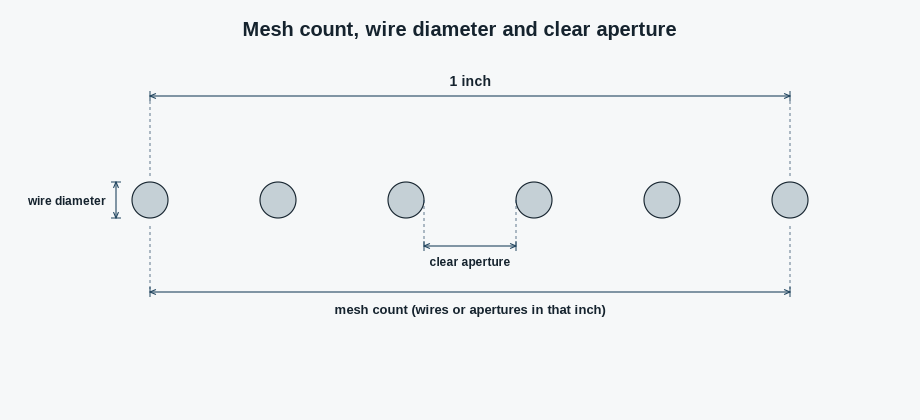
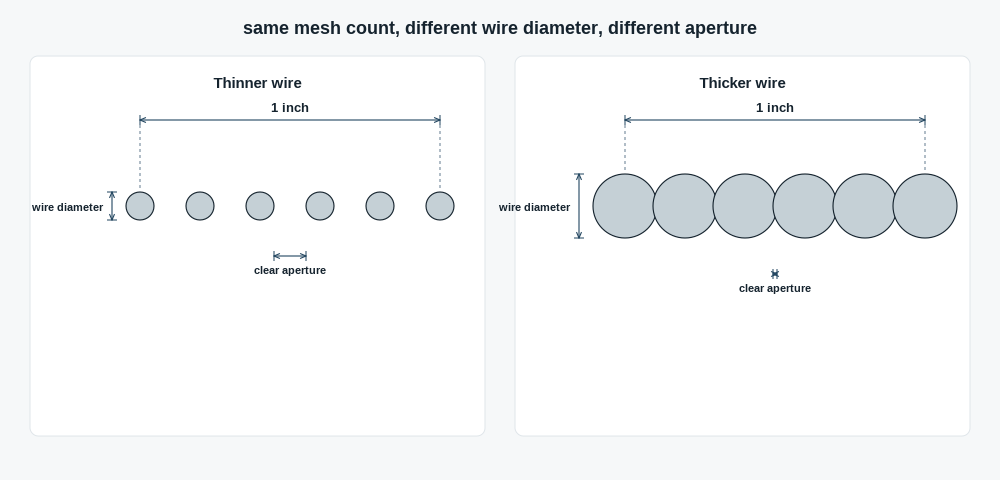
Mesh count alone does not define the opening and is not a substitute for a filtration rating.
Mesh count, wire diameter and aperture should be specified together.
For wire mesh, send the grade, construction and opening.
Wire diameter is the thickness of the wire, and should be stated in millimetres on the quotation request, together with the mesh count and the aperture. Some specifications give the diameter as a wire gauge number. SWG (Standard Wire Gauge, also called the Imperial or British Standard Wire Gauge) and BWG (Birmingham Wire Gauge, also called Stubs’ Iron Wire Gauge) use the same gauge numbers for different diameters. A gauge number is not complete unless the system — SWG or BWG — is named. These systems are not interchangeable with American Wire Gauge (AWG).
The table below converts published gauge numbers to diameter. It is a unit reference, not a stock list. CHONGXIN quotes stainless steel woven mesh with a wire diameter from 0.025 mm to 3 mm; not every gauge in a historical series falls inside that range, and not every diameter in the range is held in stock.
| Gauge | SWG (mm) | SWG (in) | BWG (mm) | BWG (in) |
|---|---|---|---|---|
| 11 | 2.946 | 0.1160 | 3.048 | 0.1200 |
| 12 | 2.642 | 0.1040 | 2.769 | 0.1090 |
| 13 | 2.337 | 0.0920 | 2.413 | 0.0950 |
| 14 | 2.032 | 0.0800 | 2.108 | 0.0830 |
| 15 | 1.829 | 0.0720 | 1.829 | 0.0720 |
| 16 | 1.626 | 0.0640 | 1.651 | 0.0650 |
| 17 | 1.422 | 0.0560 | 1.473 | 0.0580 |
| 18 | 1.219 | 0.0480 | 1.245 | 0.0490 |
| 19 | 1.016 | 0.0400 | 1.067 | 0.0420 |
| 20 | 0.914 | 0.0360 | 0.889 | 0.0350 |
| 21 | 0.813 | 0.0320 | 0.813 | 0.0320 |
| 22 | 0.711 | 0.0280 | 0.711 | 0.0280 |
| 23 | 0.610 | 0.0240 | 0.635 | 0.0250 |
| 24 | 0.559 | 0.0220 | 0.559 | 0.0220 |
| 25 | 0.508 | 0.0200 | 0.508 | 0.0200 |
| 26 | 0.457 | 0.0180 | 0.457 | 0.0180 |
| 27 | 0.417 | 0.0164 | 0.406 | 0.0160 |
| 28 | 0.376 | 0.0148 | 0.356 | 0.0140 |
| 29 | 0.345 | 0.0136 | 0.330 | 0.0130 |
| 30 | 0.315 | 0.0124 | 0.305 | 0.0120 |
| 31 | 0.295 | 0.0116 | 0.254 | 0.0100 |
| 32 | 0.274 | 0.0108 | 0.229 | 0.0090 |
| 33 | 0.254 | 0.0100 | 0.203 | 0.0080 |
| 34 | 0.234 | 0.0092 | 0.178 | 0.0070 |
| 35 | 0.213 | 0.0084 | 0.127 | 0.0050 |
| 36 | 0.193 | 0.0076 | 0.102 | 0.0040 |
| 37 | 0.173 | 0.0068 | — | — |
| 38 | 0.152 | 0.0060 | — | — |
| 39 | 0.132 | 0.0052 | — | — |
| 40 | 0.122 | 0.0048 | — | — |
| 41 | 0.112 | 0.0044 | — | — |
| 42 | 0.102 | 0.0040 | — | — |
| 43 | 0.0914 | 0.0036 | — | — |
| 44 | 0.0813 | 0.0032 | — | — |
| 45 | 0.0711 | 0.0028 | — | — |
| 46 | 0.0610 | 0.0024 | — | — |
| 47 | 0.0508 | 0.0020 | — | — |
| 48 | 0.0406 | 0.0016 | — | — |
| 49 | 0.0305 | 0.0012 | — | — |
| 50 | 0.0254 | 0.0010 | — | — |
SWG diameters follow the Imperial Standard Wire Gauge (BS 3737:1964, withdrawn). BWG diameters follow the Birmingham / Stubs’ Iron Wire Gauge. Millimetres are converted as inch × 25.4. The table is a unit reference, not a stock list.
Stainless steel wire cloth is produced in plain, twill and Dutch weave. The weave should be stated on the quotation request, together with the grade, mesh count, wire diameter and aperture. For Dutch weave or multilayer constructions, include the filtration rating and its basis.
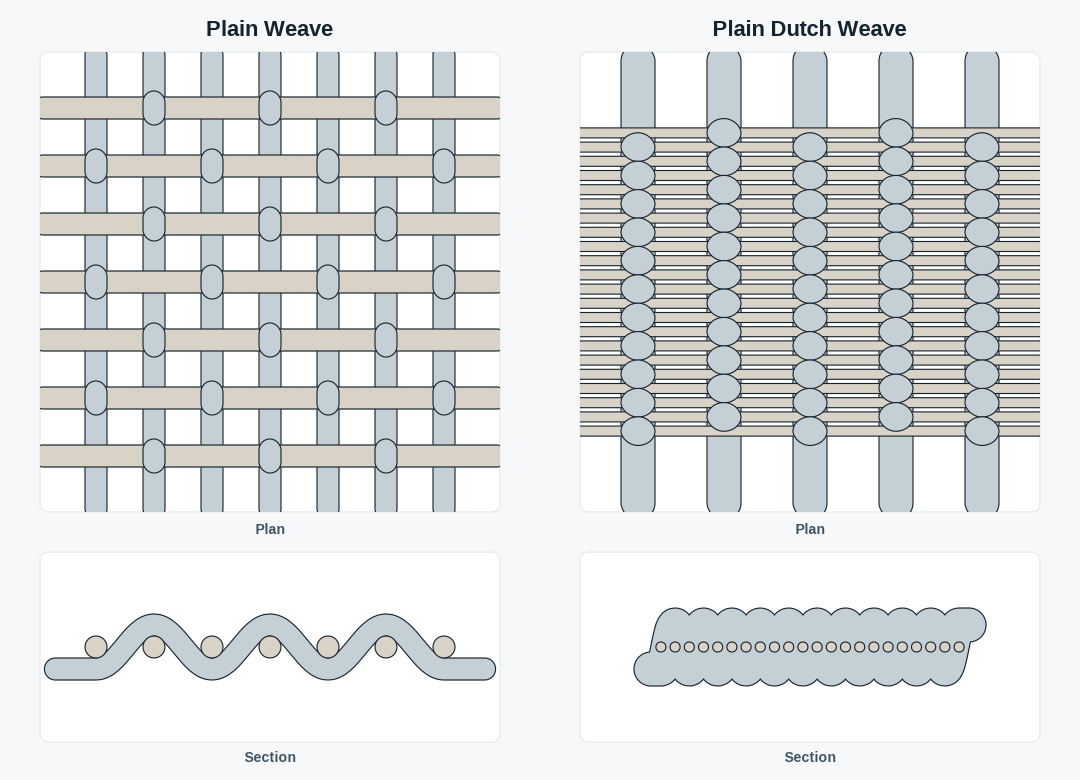
Each weft wire passes alternately over and under each warp wire. Square openings are typical. Specify mesh count, wire diameter and clear aperture together. Mesh count alone does not define the opening.
Plain Dutch weave is a dense filter weave. Warp and weft have different diameters and different mesh counts. Specify the weave designation, the warp and weft mesh counts, and the warp and weft diameters, together with the filtration rating and its basis. Mesh count alone cannot replace a filtration rating.
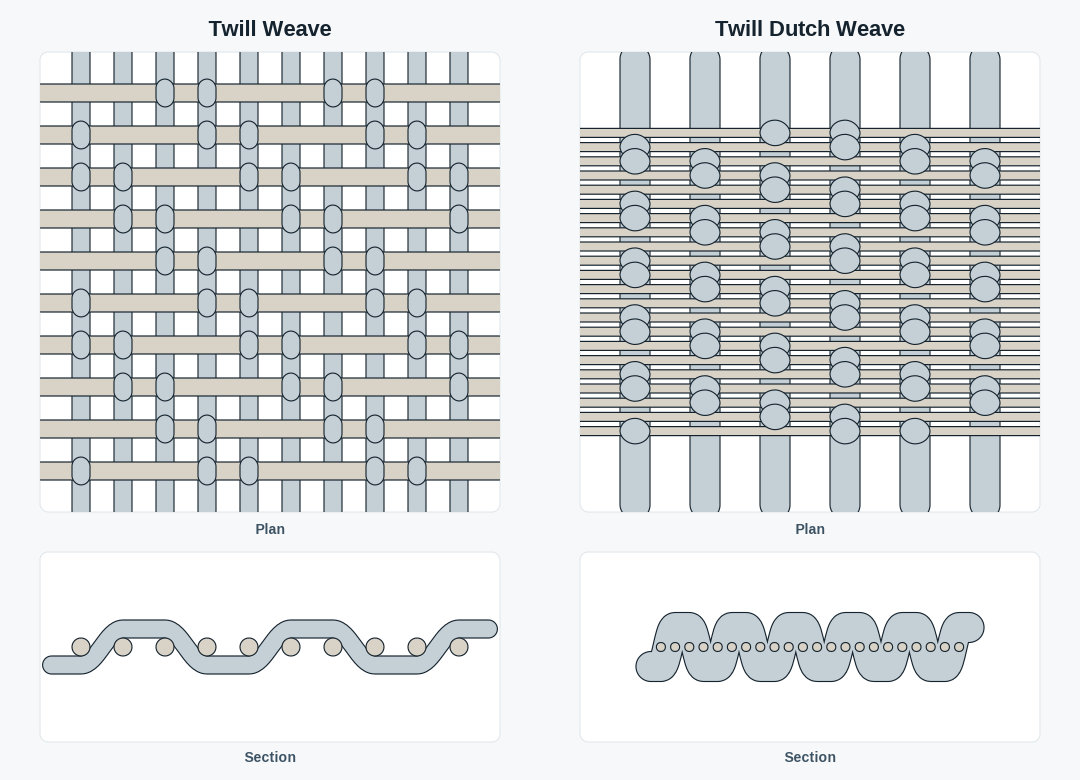
Each weft wire passes over and under two or more warp wires in a stepped pattern. Specify mesh count, wire diameter and clear aperture together. Mesh count alone does not define the opening.
Twill Dutch weave is a dense filter weave in a twill pattern, with different warp and weft diameters and mesh counts. Specify the weave designation, the warp and weft mesh counts, and the warp and weft diameters, together with the filtration rating and its basis. Mesh count alone cannot replace a filtration rating.
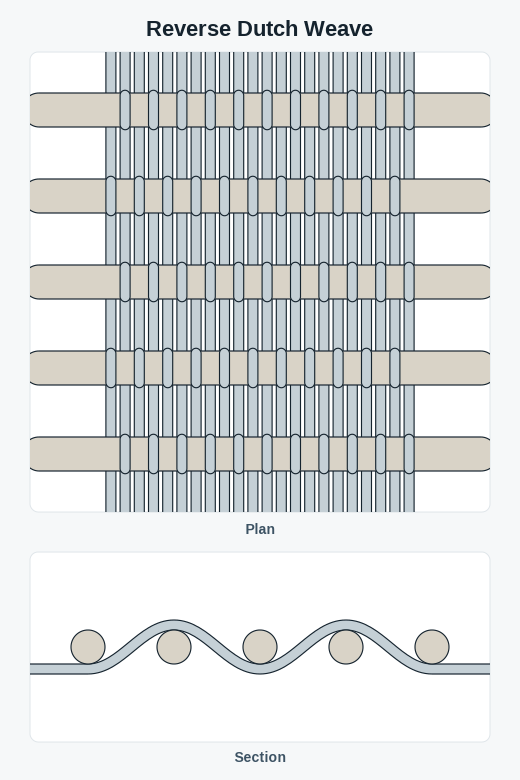
Reverse Dutch weave is a Dutch-type filter weave in which the warp and weft arrangement is reversed relative to a standard Dutch weave. Specify the weave designation, the warp and weft mesh counts, and the warp and weft diameters, together with the filtration rating and its basis. Mesh count alone cannot replace a filtration rating.
Dutch weave filter mesh is used for dense filtration. For Dutch weave or multilayer constructions, include the filtration rating and its basis. Mesh count alone cannot replace a filtration rating.
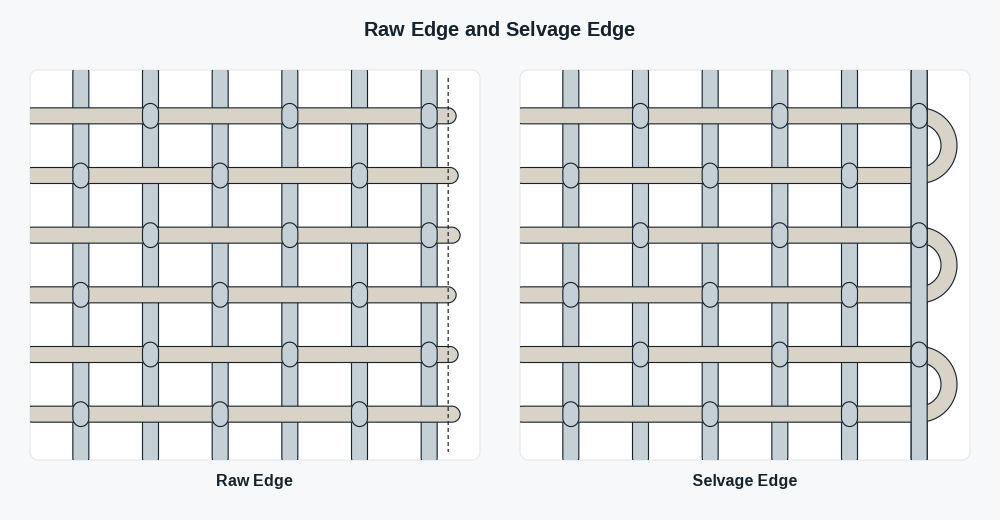
Raw edge and selvage edge are both available. State the edge required on the quotation request.
Raw Edge is the as-woven edge of the mesh.
Selvage Edge is a finished woven edge.
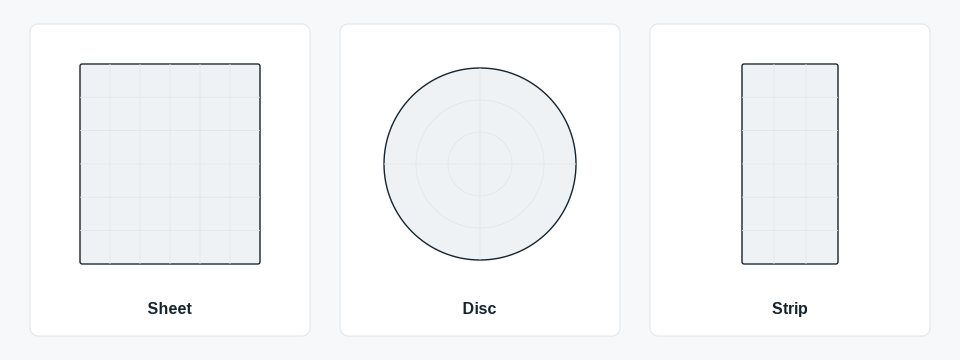
Mesh is supplied in rolls, and can also be cut to sheets, discs or strips to the size required on the request. Include the width and roll length, or the cut size, on the quotation request.
Stainless steel woven mesh can be quoted with a wire diameter from 0.025 mm to 3 mm, and a mesh count from 1 to 5,000 mesh. This is a quotation range, not a stock list. Not every combination of mesh count and wire diameter can be woven. Mesh count, wire diameter and aperture should be specified together. Binding values, tolerances, MOQ and lead time are confirmed in the written specification sheet and quotation for each order.
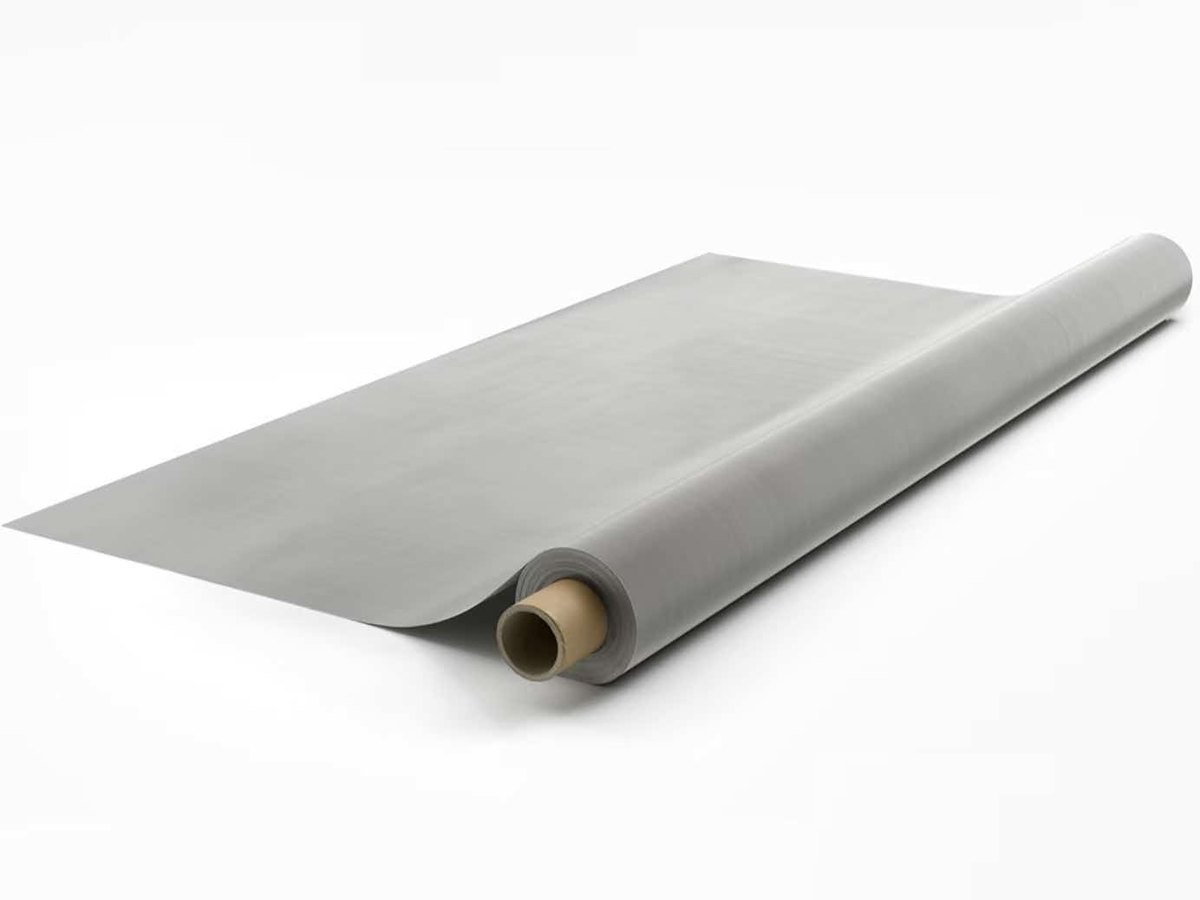
Stainless steel woven mesh can be quoted with a wire diameter from 0.025 mm to 3 mm, and a mesh count from 1 to 5,000 mesh.
| Mesh | Wire diameter | Aperture | Open area (%) | Weight (lb per 100 sq ft) | ||
|---|---|---|---|---|---|---|
| in | mm | in | mm | |||
| 1×1 | 0.08 | 2.03 | 0.92 | 23.37 | 84.6 | 41.1 |
| 2×2 | 0.063 | 1.6 | 0.437 | 11.1 | 76.4 | 51.2 |
| 3×3 | 0.054 | 1.37 | 0.279 | 7.09 | 70.1 | 56.7 |
| 4×4 | 0.063 | 1.6 | 0.187 | 4.75 | 56 | 104.8 |
| 4×4 | 0.047 | 1.19 | 0.203 | 5.16 | 65.9 | 57.6 |
| 5×5 | 0.041 | 1.04 | 0.159 | 4.04 | 63.2 | 54.9 |
| 6×6 | 0.035 | 0.89 | 0.132 | 3.35 | 62.7 | 48.1 |
| 8×8 | 0.028 | 0.71 | 0.097 | 2.46 | 60.2 | 41.1 |
| 10×10 | 0.025 | 0.64 | 0.075 | 1.91 | 56.3 | 41.2 |
| 10×10 | 0.02 | 0.51 | 0.08 | 2.03 | 64 | 26.1 |
| 12×12 | 0.023 | 0.584 | 0.06 | 1.52 | 51.8 | 42.2 |
| 12×12 | 0.02 | 0.508 | 0.063 | 1.6 | 57.2 | 31.6 |
| 14×14 | 0.023 | 0.584 | 0.048 | 1.22 | 45.2 | 49.8 |
| 14×14 | 0.02 | 0.508 | 0.051 | 1.3 | 51 | 37.2 |
| 16×16 | 0.018 | 0.457 | 0.0445 | 1.13 | 50.7 | 34.5 |
| 18×18 | 0.017 | 0.432 | 0.0386 | 0.98 | 48.3 | 34.8 |
| 20×20 | 0.02 | 0.508 | 0.03 | 0.76 | 36 | 55.2 |
| 20×20 | 0.016 | 0.406 | 0.034 | 0.86 | 46.2 | 34.4 |
| 24×24 | 0.014 | 0.356 | 0.0277 | 0.7 | 44.2 | 31.8 |
| 30×30 | 0.013 | 0.33 | 0.0203 | 0.52 | 37.1 | 34.8 |
| 30×30 | 0.012 | 0.305 | 0.0213 | 0.54 | 40.8 | 29.4 |
| 30×30 | 0.009 | 0.229 | 0.0243 | 0.62 | 53.1 | 16.1 |
| 35×35 | 0.011 | 0.279 | 0.0176 | 0.45 | 37.9 | 29 |
| 40×40 | 0.01 | 0.254 | 0.015 | 0.38 | 36 | 27.6 |
| 50×50 | 0.009 | 0.229 | 0.011 | 0.28 | 30.3 | 28.4 |
| 50×50 | 0.008 | 0.203 | 0.012 | 0.31 | 36 | 22.1 |
| 60×60 | 0.0075 | 0.191 | 0.0092 | 0.23 | 30.5 | 23.7 |
| 60×60 | 0.007 | 0.178 | 0.0097 | 0.25 | 33.9 | 20.4 |
| 70×70 | 0.0065 | 0.165 | 0.0078 | 0.2 | 29.8 | 20.8 |
| 80×80 | 0.0065 | 0.165 | 0.006 | 0.15 | 23 | 23.2 |
| 80×80 | 0.0055 | 0.14 | 0.007 | 0.18 | 31.4 | 16.9 |
| 90×90 | 0.005 | 0.127 | 0.0061 | 0.16 | 30.1 | 15.8 |
| 100×100 | 0.0045 | 0.114 | 0.0055 | 0.14 | 30.3 | 14.2 |
| 100×100 | 0.004 | 0.102 | 0.006 | 0.15 | 36 | 11 |
| 100×100 | 0.0035 | 0.089 | 0.0065 | 0.17 | 42.3 | 8.3 |
| 110×110 | 0.004 | 0.1016 | 0.0051 | 0.1295 | 30.7 | 12.4 |
| 120×120 | 0.0037 | 0.094 | 0.0046 | 0.118 | 30.7 | 11.6 |
| 150×150 | 0.0026 | 0.066 | 0.0041 | 0.1041 | 37.4 | 7.1 |
| 160×160 | 0.0025 | 0.0635 | 0.0038 | 0.0965 | 36.4 | 5.94 |
| 180×180 | 0.0023 | 0.0584 | 0.0033 | 0.0838 | 34.7 | 6.7 |
| 200×200 | 0.0021 | 0.0533 | 0.0029 | 0.0737 | 33.6 | 6.2 |
| 250×250 | 0.0016 | 0.0406 | 0.0024 | 0.061 | 36 | 4.4 |
| 270×270 | 0.0016 | 0.0406 | 0.0021 | 0.0533 | 32.2 | 4.7 |
| 300×300 | 0.0015 | 0.0381 | 0.0018 | 0.0457 | 29.7 | 3.04 |
| 325×325 | 0.0014 | 0.0356 | 0.0017 | 0.0432 | 30 | 4.4 |
| 400×400 | 0.001 | 0.0254 | 0.0015 | 0.037 | 36 | 3.3 |
| 500×500 | 0.001 | 0.0254 | 0.001 | 0.0254 | 25 | 3.8 |
| 635×635 | 0.0008 | 0.0203 | 0.0008 | 0.0203 | 25 | 2.63 |
Request a quotation with the grade, weave, mesh count, wire diameter, aperture, width and roll length, or the cut size.
Stainless steel mesh and stainless steel wire are quoted in 201, 304, 316 or 430. The grade is confirmed on the written specification sheet and quotation for each order.
Copper wire mesh is produced in copper alloys — pure copper C11000 / 99.9%, brass and phosphor bronze. These are not stainless steel grades. Request a quotation on the copper wire mesh page.
Iron wire is produced in our own factory as galvanized iron wire, also called GI wire, together with black annealed iron wire and plain iron wire. Iron wire is not quoted as a stainless steel grade.
CHONGXIN manufactures wire mesh and wire in Anping, China. Stainless steel woven, welded, crimped, insect, decorative, Dutch weave and perforated metal in 201, 304, 316 and 430 are produced in our own factory, together with copper wire mesh, stainless steel wire and iron wire.
Filter cylinders and fabricated filter elements are supplied to the approved drawing or sample.
Filter cylinders and mesh filter tubes, and fabricated filter elements including discs, packs, baskets and cones, are supplied to the approved drawing or sample. Send the drawing or sample and the form required on the matching product page. Introduction pages for those forms are on the knowledge pages; this Technology page does not rewrite them.
Export packing, batch labels and shipping documents are prepared for the destination named in the enquiry, and confirmed in the written quotation.
This page does not publish nominal MOQ, packing, payment or shipping figures.
Packing details can be stated on the quotation request.
Note: Binding values, tolerances, MOQ and lead time are confirmed in the written specification sheet and quotation for each order. This page does not publish nominal MOQ, packing, payment or shipping figures. Request a quotation on the product page that matches the item, on the homepage quotation form, or on the contact page.
Application notes remain on the Applications pages, which are organised by duty. This Technology page does not rewrite them.
We hold ISO 9001 and a 3A enterprise credit rating. EN 10204 3.1 material certificates and third-party inspection can be arranged with the order.
EN 10204 3.1 material certificates and third-party inspection are arranged with the order when they are required; they are not part of the certificate archive.
View the certificate archive for scans of the ISO 9001 quality management system certificate and the 3A enterprise credit documents.
Note: Binding values, tolerances, MOQ and lead time are confirmed in the written specification sheet and quotation for each order.
It sets out how to specify mesh, wire and filter elements, using the rules already used on the product pages. It is not a process or equipment page.
No. Mesh count, wire diameter and aperture should be specified together. Mesh count alone does not define the opening and is not a substitute for a filtration rating.
Include the filtration rating and its basis. For Dutch weave or multilayer constructions, mesh count alone cannot replace a filtration rating. Use the Dutch weave wire mesh page.
201, 304, 316 and 430. Copper wire mesh is produced in copper alloys — pure copper C11000 / 99.9%, brass and phosphor bronze — and is not quoted as a stainless steel grade.
Filter cylinders and fabricated filter elements are supplied to the approved drawing or sample. Request a quotation on the matching filter-element product page, and send the drawing or sample and the form.
Use the quotation form on the product page that matches the item, the homepage quotation form, or the contact page. The Purchasing FAQ page sets out what to send with the request.
Yes. Our mesh calculator estimates aperture, wire diameter, mesh count and nominal open area for square-woven mesh. Mesh count, wire diameter and aperture should be specified together. Binding values, tolerances, MOQ and lead time are confirmed in the written specification sheet and quotation for each order.
We hold ISO 9001 and a 3A enterprise credit rating. The certificate archive shows those enterprise-level records as issued by third-party bodies.
Mesh count alone does not define the opening. Mesh count, wire diameter and aperture should be specified together. A micron is only a unit for stating the opening. Our mesh calculator estimates the relationship for square-woven mesh. Binding values are confirmed in the written specification sheet and quotation for each order.
Plain weave, twill weave, plain Dutch weave, twill Dutch weave and reverse Dutch weave. For Dutch weave or multilayer constructions, include the filtration rating and its basis.
Yes. Raw edge and selvage edge are both available. State the edge required on the quotation request.
Yes. Mesh is supplied in rolls, and can also be cut to sheets, discs or strips to the size required on the request.
Stainless steel woven mesh can be quoted with a wire diameter from 0.025 mm to 3 mm, and a mesh count from 1 to 5,000 mesh. This is a quotation range, not a stock list. Not every combination can be woven. Mesh count, wire diameter and aperture should be specified together.